If you have been told you are not a candidate for dental implants, a second opinion is usually worth getting. Most declines are not a permanent biological verdict — they reflect the imaging, bone-reconstruction capability, and case complexity a particular practice is set up to handle. A meaningful second-opinion evaluation measures bone at the actual planned implant sites using CBCT 3D imaging, reviews your medical history in coordination with your physician, and ends with a written explanation of what would need to happen for implants to become possible. Some declines are correct and permanent. Far more often, the answer changes once someone looks in three dimensions.
One of the most common questions patients ask when they call our offices is some version of: “Another office told me I can’t have implants. Is that the final answer?” It rarely is. But understanding why you were told no matters more than simply hearing a different opinion.
Why Patients Are Told They Are Not Candidates for Implants
A decline is almost always based on something real. The question is whether that finding is a permanent barrier or a problem that has to be solved first. The most common reasons patients arrive here having been turned away:
- Insufficient bone volume — The implant needs bone to anchor into. When a tooth has been missing for years, the alveolar ridge resorbs in both width and height, and a flat X-ray can make the site look hopeless. This is by far the most frequent reason for a decline, and it is also the most frequently reversible one.
- Sinus proximity in the upper back jaw — In the posterior maxilla, the maxillary sinus sits directly above the molar roots. After those teeth are lost, the sinus floor often pneumatizes downward, leaving only a few millimeters of vertical bone. A practice that does not perform sinus augmentation has no option but to say no.
- Untreated gum disease — Active periodontal infection destroys the very bone an implant depends on, and placing an implant into an inflamed field invites early failure. This is a sequencing problem, not a candidacy problem: the disease is treated and stabilized first.
- A medical condition or medication — Diabetes, osteoporosis therapy, autoimmune conditions, or a history of radiation to the jaws all require coordination with the treating physician. Some practices decline rather than manage that coordination.
- Smoking — Smoking measurably raises risk, particularly at grafted sites. Risk is not the same as disqualification, and it is usually a discussion rather than a door closing.
- Case complexity beyond that practice’s scope — Full-arch reconstruction, zygomatic anchorage, severe three-dimensional defects, and cases needing block grafting sit outside what a general practice reasonably takes on. Declining these cases is good judgment.
Notice what these have in common. Nearly all of them describe a site condition or a coordination requirement — not a patient who is biologically incapable of healing around titanium.
“Not a Candidate Anywhere” vs. “Not a Candidate at This Practice”
This is the distinction that changes the conversation, and it is the one most patients never have explained to them.
Being told no by a general dentist usually means: with the imaging and surgical services available in this office, this case cannot be treated predictably. That is an honest and appropriate answer. A dentist who declines a case outside their scope is protecting you. The problem is that the sentence a patient actually hears — “you’re not a candidate” — sounds like a statement about their body rather than a statement about scope.
The gap between those two meanings is where most of our second-opinion patients live. A site with four millimeters of vertical bone under the sinus is genuinely untreatable without augmentation. It is routinely treatable with it. A ridge that is too narrow for a standard-diameter implant is a different case entirely once ridge augmentation is on the table. Advanced bone grafting is the reason so many declines are provisional rather than final — the deficiency is rebuilt, healing is allowed, and the site that could not hold an implant now can.
None of this means the first provider was careless. Different practices are built for different case mixes, and not every implant case is simple. The relevant question is not who was right. It is whether your case was ever evaluated with the tools that could answer it.
What a Genuine Second-Opinion Evaluation Should Include
A second opinion is only useful if it is a real re-examination rather than a repeat of the first one. Before you schedule, know what you should expect to receive.
- CBCT 3D imaging rather than a flat X-ray — A panoramic radiograph compresses a three-dimensional jaw into a two-dimensional shadow. It cannot show ridge width at all, and it distorts height. Cone beam computed tomography reconstructs the jaw volumetrically, so bone height, width, density, nerve position, and sinus anatomy can be measured directly.
- Bone measured at the actual planned implant sites — “You don’t have enough bone” is not a finding. A finding sounds like: at the site of the missing first molar there are 5.2 millimeters of vertical bone below the sinus floor and 6 millimeters of ridge width. Numbers at specific sites are what a treatment plan is built from.
- Medical history reviewed in coordination with your physician — Systemic conditions and medications should be discussed with the doctor managing them, not adjudicated from a form. This is general education rather than medical advice, and clearance decisions belong to your physician.
- A written explanation of what would need to happen — Sequence, grafting if needed, healing intervals, and the honest range of what is achievable. You should leave with something you can read at home and take to another provider if you want to.
- An explicit statement of risk — Not a promise. Any surgeon who tells you an outcome is guaranteed is telling you something biology cannot support.
The evaluation exists to replace an unexplained “no” with a specific, measurable picture. Even when the conclusion is the same, you now know why.
When a Decline Is Correct — and Sometimes Permanent
Honesty runs in both directions. There are situations where the right answer really is that implants are not appropriate, at least not now:
- Active, uncontrolled systemic disease — When healing capacity is significantly compromised, elective surgery is usually deferred until the underlying condition is better managed. Deferral and refusal are different words.
- A history of high-dose radiation to the jaws — Irradiated bone heals differently, and candidacy here is decided jointly with the treating oncology team.
- Untreated periodontal disease that the patient does not want to treat — Implants placed into an environment that destroyed the natural teeth will face the same bacterial challenge.
- Bone loss so extensive that even reconstruction cannot create a restorable result — This is uncommon, and it should only ever be concluded after 3D imaging, not before.
- Expectations that no surgical plan can meet — Sometimes the honest answer is that a different restorative option will serve you better.
A second opinion that simply tells every patient yes is not a second opinion. It is a sales pitch.
What Should You Bring to a Second-Opinion Consultation?
Bringing the right material shortens the process and often spares you repeat imaging.
- Any imaging already taken — Panoramic films, periapical X-rays, and especially any existing CBCT scan. Ask for the raw DICOM files on a disc or by secure transfer, not just a printed image.
- A current medication list — Including dosages, how long you have been taking each one, and any bone-density medication past or present.
- Your physician’s contact information — So coordination can begin without a delay.
- Whatever written explanation you were given — Even a short note about why implants were ruled out is useful context.
- Your own questions, written down — What specifically is deficient? What would rebuild it? How long would it take? What happens if I do nothing?
How Do You Raise a Second Opinion With Your Current Dentist?
Patients worry about this more than they need to. Seeking a surgical second opinion is a normal part of medicine, and most dentists expect it for complex cases — many initiate the referral themselves.
A straightforward framing works: “I understand implants aren’t something you’d take on in this situation. I’d like to have the site evaluated with 3D imaging by an implant surgeon before I decide. Could you send my records?” That sentence contains no accusation, and it is accurate. You are asking for a different scope of evaluation, not a verdict on anyone’s judgment.
Your general dentist typically remains central to your care afterward — hygiene, restorative work, and long-term monitoring continue with them regardless of who places an implant. There is nothing to repair in that relationship.
Getting Specialist-Level Implant Surgery Without Leaving South Florida
Patients told no locally sometimes assume the next step is a university hospital in another state. For most cases, it is not. South Florida has concentrated implant-surgical capability, and the specific combination that resolves most declines — CBCT imaging, guided surgical planning, sinus augmentation and block grafting expertise, an in-house lab, and sedation options — can be found within a short drive.
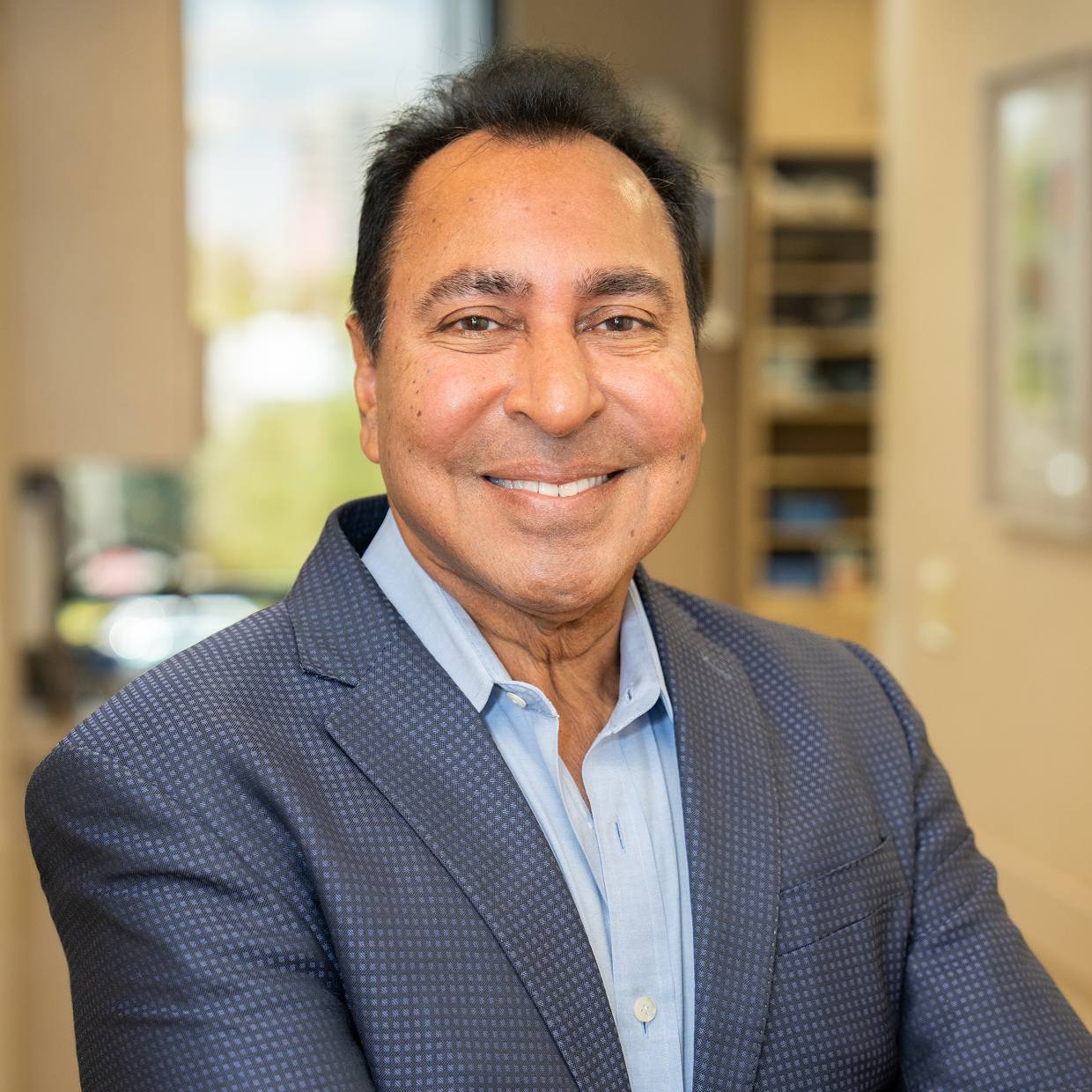
Dr. Arun K. Garg spent over 20 years as a full-time professor of surgery in the Division of Oral and Maxillofacial Surgery and director of residency training at the University of Miami Leonard M. Miller School of Medicine. He is considered the world’s preeminent authority on bone biology, bone harvesting and bone grafting for dental implant surgery, has published nine books translated into multiple languages, and has trained more than 20,000 dentists. That teaching background is the reason complex declined cases tend to find their way here — and it is also why patients travel to this practice from well outside the region. If you already live in Miami-Dade or Broward, the travel question is largely answered for you.
This concentration of surgical focus is the practical meaning of why a specialty implant practice matters: the tools that reopen a closed case are in daily use rather than referred out.
Frequently Asked Questions
Does a second opinion mean my dentist was wrong?
Usually not. A dentist who declines a case outside their surgical scope is exercising appropriate judgment. What changes at a second opinion is the depth of imaging and the range of reconstructive options on the table, not the accuracy of the original observation. Both assessments can be correct at the same time — they are simply answering different questions.
Will I need new imaging, or can I use the X-rays I already have?
If you have an existing CBCT scan of the relevant area and it is recent, it can often be used. Panoramic and periapical X-rays are helpful background but cannot measure ridge width or bone density, so a CBCT is generally needed before any surgical plan is made. Bring whatever you have and ask for the digital files rather than printouts.
How long does it take to find out whether implants are possible?
The evaluation itself is typically a single visit with imaging and examination. What varies is the treatment timeline afterward. Cases needing grafting or sinus augmentation involve healing intervals measured in months before placement, and those intervals are biological rather than schedulable. You should know the likely sequence by the end of the consultation.
What if the second opinion also says no?
Then you have something you did not have before: a measured, explained reason, and usually a clear statement of what would have to change. Sometimes that means treating gum disease, improving control of a systemic condition, or coordinating with a physician. Sometimes it means a different restorative approach is genuinely the better plan.
Find Out What Your Bone Actually Looks Like
Being told you are not a candidate is worth taking seriously. It is not worth accepting without a three-dimensional look at the sites in question. If you were declined without a CBCT scan, without site-specific measurements, or without a clear explanation of what grafting could change, you have not yet had the evaluation that answers the question. Schedule a consultation and we will show you what your situation actually looks like — including if the honest answer is no.
Center for Dental Implants welcomes patients from across South Florida, with offices in Aventura, Hallandale Beach, and Pembroke Pines.