
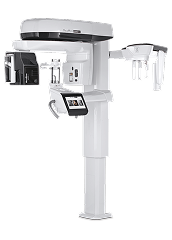
3D CBCT Scanner
Successful dental treatment—especially dental implants—starts with a complete understanding of your anatomy.
Our 3D CBCT (Cone Beam Computed Tomography) scanner provides a highly detailed, three-dimensional view of your teeth, jawbone, nerves, and surrounding structures. Unlike traditional imaging, which offers a flat, limited perspective, CBCT allows us to evaluate your oral health from every angle.
This is especially important for procedures like dental implants, bone grafting, and sinus lifts, where precision is critical. With this technology, we can:
- Accurately measure bone density and volume
- Identify the exact location of nerves and sinuses
- Detect underlying conditions that may not be visible on standard X-rays
- Plan implant placement with a high degree of accuracy
By seeing the full picture before treatment begins, we can reduce risks, improve efficiency, and create more predictable, long-lasting results. It allows us to plan with confidence—and helps you feel more confident in your care.
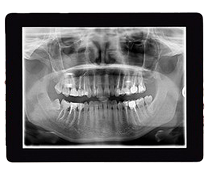
Digital X-Rays
Digital X-rays are an essential part of preventive and diagnostic dentistry, allowing us to detect issues early and monitor your oral health over time.
Compared to traditional X-rays, digital imaging uses significantly less radiation while producing clearer, more detailed images. These high-resolution images help us identify concerns such as cavities, infections, bone loss, and changes beneath the surface of the teeth and gums.
One of the biggest advantages is immediacy. Your images are available within seconds, which means we can review them with you chairside, explain what we’re seeing, and walk you through your options in real time.
This transparency helps you better understand your oral health and feel more involved in your treatment decisions. Early detection also means more conservative treatment whenever possible—helping preserve your natural teeth and avoid more complex procedures down the line.
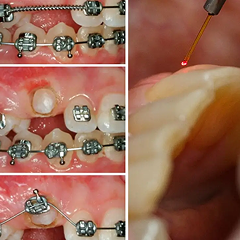
Laser Technology
Laser technology allows us to perform a range of soft tissue procedures with greater precision and a more comfortable patient experience.
Instead of relying solely on traditional instruments, dental lasers use focused light energy to treat targeted areas with minimal impact on surrounding tissue. This can be especially beneficial in gum treatments, periodontal therapy, and certain restorative procedures.
For patients, this often means:
- Less discomfort during and after treatment
- Reduced need for sutures in some procedures
- Minimal bleeding and swelling
- Faster healing and recovery times
Laser dentistry also allows for a more conservative approach, helping preserve healthy tissue while effectively treating the area of concern. It’s one more way we prioritize both precision and patient comfort in everything we do.
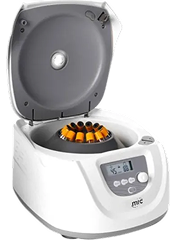
PRP Machines
Healing plays a critical role in the success of many dental procedures—particularly dental implants and bone grafting.
PRP (Platelet-Rich Plasma) technology enhances your body’s natural healing process by using concentrated growth factors derived from your own blood. After a small sample is taken, it is processed to isolate platelets, which are rich in proteins that support tissue regeneration.
When applied during treatment, PRP can:
- Accelerate the healing process
- Support bone and tissue regeneration
- Improve the integration and stability of dental implants
- Reduce inflammation and post-procedure discomfort
Because PRP uses your body’s own biology, it is a safe and natural way to promote more efficient healing and better overall outcomes. It’s particularly valuable in advanced procedures where optimal healing is essential to long-term success.
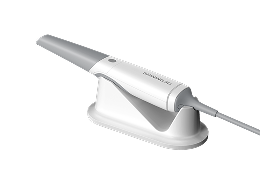
Intraoral scanner (Shining3D)
Traditional dental impressions can be uncomfortable, messy, and time-consuming. Our intraoral scanner offers a modern alternative that is faster, more precise, and far more comfortable.
Using a small handheld device, we capture detailed 3D images of your teeth and bite in just minutes. There’s no need for impression trays or materials—just a smooth, streamlined digital process.
These highly accurate scans are used to design restorations such as crowns, bridges, implants, and clear aligners with exceptional precision.
Benefits of digital scanning include:
- A more comfortable patient experience
- Improved accuracy and fit of restorations
- Faster turnaround times for treatment
- Better communication and visualization of your care
You’ll even be able to see your scans on screen, helping you better understand your treatment and feel more engaged in the process.
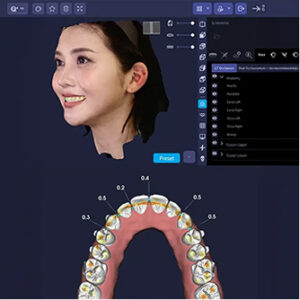
Digital Treatment Planning
Precision in dentistry doesn’t happen by chance—it starts with careful, detailed planning.
Our digital treatment planning technology allows us to map out your care before any procedure begins. By combining 3D imaging, digital scans, and advanced software, we can create a fully customized plan tailored to your unique anatomy and goals.
This is particularly valuable for dental implants and full-arch restorations, where exact placement and alignment are critical. With digital planning, we can:
- Determine ideal implant positioning before surgery
- Anticipate potential challenges in advance
- Coordinate restorative and surgical phases seamlessly
- Visualize expected outcomes more clearly
This level of planning helps reduce surprises, improve efficiency, and ensure that every step of your treatment is aligned with a successful final result.
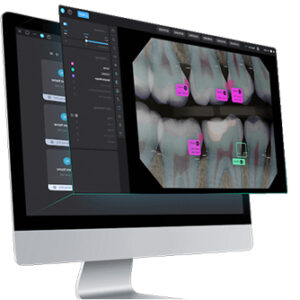
Pearl AI Diagnostic Technology
Accurate diagnosis is the foundation of effective dental care.
We use Pearl AI technology to support our diagnostic process, adding an advanced layer of analysis to digital X-rays. This artificial intelligence system is trained to identify patterns associated with conditions like cavities, bone loss, and gum disease—often at very early stages.
Pearl AI works alongside clinical expertise, helping to:
- Highlight areas of concern that may be easily overlooked
- Support earlier detection of developing issues
- Provide visual insights that can be shared with patients
- Enhance consistency and accuracy in diagnosis
For you, this means greater confidence in your evaluation and a clearer understanding of your oral health. It also allows us to take a more proactive approach—addressing issues early, when treatment is often simpler and more conservative.